
Britain rarely does weather by halves. One week you’re dealing with driving rain and gale-force gusts, the next you’re stood in the garden squinting against strong sun with the hosepipe ban notices going up. Your fence takes the brunt of all of it, all year round, whether it’s a timber panel fence in Wolverhampton or a steel fence line out towards the Shropshire border.
A bit of regular care keeps your fence standing straight, looking good and doing its job for years longer than one that’s left to fend for itself. In our fence maintenance guide, we cover what to do season by season, from spring clean-ups to winter storm prep. This post digs a little deeper into three specific culprits behind most fence damage in the UK: rain, wind and sun.
Why Fence Maintenance Matters
Skipping fence maintenance doesn’t just mean a scruffier garden. It shortens the life of your fence, and small problems left unchecked turn into bigger, more expensive ones. Regular upkeep protects your investment and keeps your garden secure.
Benefits of regular fence maintenance:
- Spots rot, rust or loose fixings before they cause a full panel or post failure
- Keeps your fence structurally sound in strong winds, rather than at risk of blowing down
- Protects timber from water damage, which is one of the most common causes of early fence failure
- Reduces fading and cracking caused by prolonged UV exposure
- Helps your fence look presentable for longer, which matters if it’s visible from the street or a neighbour’s garden
- Saves you money over time, since small repairs are far cheaper than a full replacement
Protecting Your Fence from Rain
Rain is the biggest long-term threat to a timber fence. Wood that stays damp for long periods is far more likely to rot, warp or grow mould, and in a country where it rains on average well over 100 days a year, that risk builds up quickly.
Keep Water Away from the Base
The bottom of your fence posts and panels is usually the first place damage shows up, because that’s where water collects and lingers. Fit gravel boards along the base of timber panels to lift the wood clear of wet soil, and make sure the ground slopes gently away from your fence line rather than towards it.
Check Post Caps and Capping Rails
Post caps and capping rails stop rainwater sitting on top of exposed timber and soaking in from above. If yours are missing, cracked or coming loose, replace them before the wetter months set in — it’s a small job that prevents a much bigger one.
Reseal or Restain When Water Stops Beading
A water-repellent stain or preservative should cause rain to bead up and run off the surface. Once you notice water soaking in rather than beading, that’s your cue to clean the fence and reapply treatment. How often you’ll need to do this varies with the product, the wood and how exposed your fence is, so treat manufacturer guidance as your starting point rather than a fixed rule.
Protecting Your Fence from Wind
The UK’s Atlantic-driven weather means strong winds and named storms are a regular feature, especially through autumn and winter. Wind doesn’t just push against your fence, it finds the weak points and works them loose over time.
Check Posts for Movement
Give each post a gentle push test every few months. Any wobble at the base is worth investigating straightaway, since a loose post under load is usually what causes a whole panel to come down in a storm.
Inspect Panels and Fixings Regularly
Loose boards, sagging rails or worn fixings all reduce how much wind pressure your fence can handle before something gives. A single weak panel can act like a sail and pass extra strain onto the panels either side of it, so it pays to fix small issues promptly rather than waiting.
Choose Wind-Smart Panel Designs
Solid, closeboard-style panels present a large flat surface to the wind, which increases the load on posts and fixings. Semi-solid, slatted or louvred designs allow some air to pass through, which can help reduce wind pressure in exposed gardens.
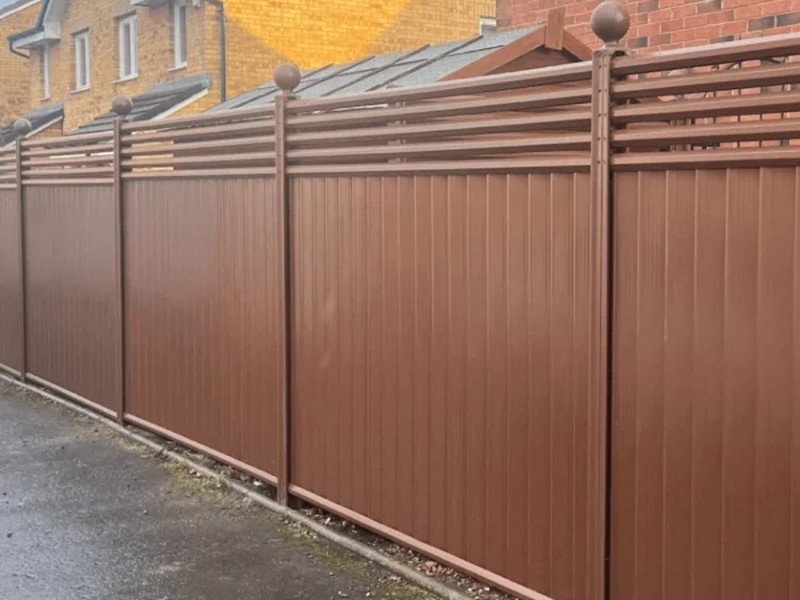
If you’re considering a new fence, ColourFence offers strong, low-maintenance steel fencing with a choice of decorative trellis tops, including slatted, square and other contemporary designs. These allow you to personalise your garden boundary while benefiting from fencing designed to withstand strong winds.
Consider a Maintenance-Free Alternative
If wind damage is a recurring problem, it’s worth looking at fencing built specifically to handle it. Our ColourFence steel fencing is engineered to withstand very high winds without warping, cracking or coming loose, and needs no repainting or resealing afterwards.
Protecting Your Fence from Sun
Sun damage is easy to overlook because it works slowly, but prolonged UV exposure dries out timber, fades colour and eventually causes splitting and cracking.
Use a UV-Blocking Stain or Sealant
A stain or sealant with UV protection helps timber keep its colour and slows down the drying-out process that leads to splitting. South- and west-facing fence lines, which get the most direct sun in a UK garden, benefit most from this.
Watch for Cracking and Warping
Check timber periodically for surface cracks, especially during long dry spells. Once wood starts to crack, moisture can get in more easily during the next spell of rain, so it’s worth treating or replacing affected boards before winter arrives.
Keep an Eye on Colour Fade
Fading is mostly cosmetic, but it’s a useful early warning sign that your fence’s protective coating is wearing thin and due for a refresh.
General Fence Care Habits Worth Building
Simple habits that protect your fence year-round:
- Clear leaves, cuttings and debris from the base of the fence regularly, since trapped moisture and plant matter accelerate rot
- Trim back overhanging branches and vegetation that could fall on the fence or trap damp against it
- Clean the fence a couple of times a year using a mild detergent and a soft brush, rather than an aggressive pressure wash that can strip timber fibres
- Walk the full length of your fence after any named storm to check for movement, loosening or fresh damage
- Use galvanised or stainless steel fixings when replacing screws or brackets, since standard fixings corrode and weaken over time
Get Expert Advice
If your fence is showing signs of wear, or you’d simply rather not spend your weekends treating timber, Midlands Fencing Solutions can help. We install and maintain fencing across Wolverhampton including low-maintenance options that are built to handle everything British weather throws at them.
Get in touch with our team for a free quote to see the full range we install across Wolverhampton and the West Midlands.
Frequently Asked Questions
How often should I treat my fence?
This depends on the product and how exposed your fence is, so it’s best to follow the manufacturer’s guidance and check the wood regularly — if rain stops beading and starts soaking in, it’s time to retreat.
Can I pressure wash my fence?
You can, but use a low setting and keep some distance from the surface, since aggressive pressure washing can strip timber fibres and damage the wood.
What's the biggest cause of fence damage in the UK?
Prolonged damp at the base of posts and panels is one of the most common causes of rot, closely followed by wind stress on loose fixings and worn panels.
Do I need to do anything to my fence before winter?
Yes. Clear debris, check post stability, tighten or replace worn fixings, and make sure any timber is cleaned and treated before the wetter, windier months set in.
Is a low-maintenance fence worth considering?
If you’re finding regular upkeep difficult to keep on top of, a steel system like ColourFence removes the need for painting, staining or resealing altogether, while still standing up to strong winds.
How do I know if a fence post needs replacing rather than repairing?
If the post wobbles under a gentle push, feels soft or shows visible rot at the base, it’s usually time to replace it rather than try to reinforce it.